
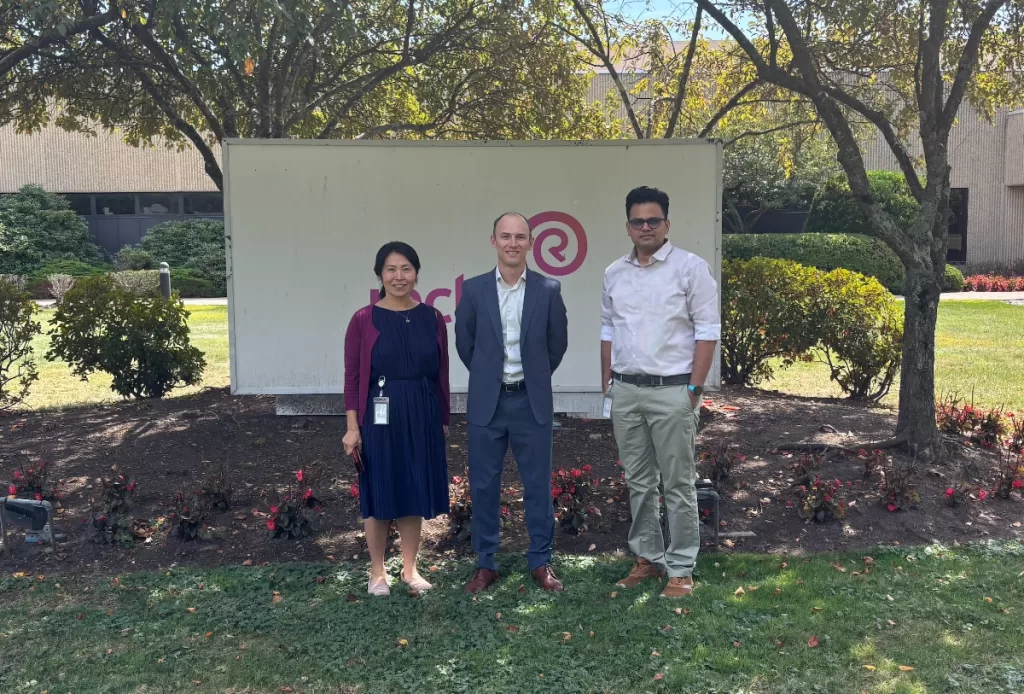
At Arome Science, we’re focused on understanding complex distributions of small molecules and their role in health and daily life. Recently, our CEO, Alexey Melnik, joined Reckitt’s Innovation Speaker Series in Montvale, NJ, to discuss how metabolomics can lead to uncovering new insights and strengthening our collaboration with Reckitt. It was a chance to share the science we’re passionate about and highlight the progress we’re making together.
Microbial Bile Acids Provide New Clues to Gut Health
One of our primary interests is the gut, where microbes shape molecules in surprising ways. In a 2020 Nature study from Dorrestein lab at UCSD, mice with and without gut microbes were compared, which led to identifying new bile-acid conjugates of amino acids phenylalanine, tyrosine, and isoleucine, alongside known glycine and taurine ones. It turns out these molecules are commonly found in the gut, but are linked to conditions such as inflammatory bowel disease (IBD), suggesting a link to health.
One finding stood out in particular: a phenylalanine-linked bile acid is about 100 times more effective than chenodeoxycholic acid (CDCA) at activating the FXR receptor, which helps regulate bile acids and glucose metabolism. The study, currently cited over 500 times, led us to create a bile-acid standard library with over 135 synthesized molecules and predictions for 20,000 more, to fuel further research.
Reference: Quinn R.A., Melnik A.V., et al. (2020). Global chemical effects of the microbiome include new bile acid conjugations. Nature. DOI: 10.1038/s41586-019-1679-1
VOC Metabolomics: Understanding Everyday Odors
Beyond the gut, we’re also exploring volatile organic compounds (VOCs), the molecules behind the smells. For skin, we use a PDMS-based device to non-invasively collect scent profiles. By testing lab-grown skin and microbial communities, we’ve explored how personal-care products affect odor-causing compounds like isovaleric acid (sweaty feet) or sulfur volatiles (rotten onions). At Reckitt’s 2024 Innovation Seminar, we shared early findings that some formulations reduce these odors and revealed unexpected antibacterial properties in compounds like FAMEs. This work offers promising ideas for product development.
Why This Work Matters
Genes or proteins show potential of what can happen, but metabolomics gives us a direct look at what’s happening in biological systems. The examples above of bile-acids, molecules that shed light on how gut microbes influence health, while VOC can be linked to safety and performance of consumer products. Partnering with Reckitt lets us connect these molecular insights to practical outcomes, from health advancements to better everyday products.
Moving Forward
Our collaboration with Reckitt is about building on science to create meaningful solutions. By studying molecules like bile acids and VOCs, we’re uncovering insights that could improve health and enhance everyday products. We’re excited to keep pushing forward with Reckitt and see where this science takes us.