S’Wipe IQ
Gut Inflammation Panel
ELISA protein biomarkers from a S’Wipe collection
Why Measure Gut Inflammation Proteins?
A targeted panel may provide research-grade information related to:
- Mucosal inflammation: markers such as calprotectin and lactoferrin are associated with active intestinal inflammation in published studies
- Gut barrier function: proteins such as zonulin are studied as indicators of tight junction integrity (interpretation remains an active research area)
- Mucosal immune status: secretory IgA reflects local antibody production in the gut lining
- Enterocyte integrity: I-FABP is elevated in conditions involving intestinal epithelial injury
- Systemic immune signaling: LBP is associated with bacterial translocation and downstream inflammatory responses
When combined with short-chain fatty acid (SCFA) profiles (particularly butyrate), which plays an established role in gut barrier maintenance and mucosal immunity. These markers can provide a more integrated research perspective than either measurement alone.
No individual marker should be interpreted in isolation, and results should not be used for clinical decision-making without evaluation by a qualified clinician.
The Gut Inflammation Biomarker Panel
- Calprotectin
- Lactoferrin
- Lysozyme
- Secretory IgA
- Pancreatic Elastase
- Functional Beta Glucoronidase
- Occult Blood/Hemoglobin
All markers are measured from the same fecal S’Wipe collection. When ordered with S’Wipe metabolomics, results are automatically paired with fecal SCFA profile (butyrate, propionate, acetate).
| Biomarker | What it measures | Research context |
|---|---|---|
| Calprotectin | Neutrophil-derived protein released during intestinal inflammation | The most extensively validated fecal marker of mucosal inflammation; elevated levels are associated with active IBD and Crohn's disease in numerous clinical studies |
| Lactoferrin | Antimicrobial protein released by activated neutrophils | Well-studied fecal inflammation marker; correlates with mucosal disease activity and is used in IBD research as a complement to calprotectin |
| Lysozyme | Antimicrobial enzyme secreted by neutrophils, macrophages, and Paneth cells | A marker of innate immune activation in the gut; elevated fecal levels reflect granulocyte and macrophage infiltration and have been studied alongside calprotectin and lactoferrin in the context of intestinal inflammation and IBD activity |
| Secretory IgA | Primary antibody mediating mucosal immune defense | Reflects the activity of the gut-associated immune system; studied in the context of mucosal immunity, gut dysbiosis, and immune suppression |
| Pancreatic Elastase | Protease secreted by the exocrine pancreas and measured in stool as a proxy for pancreatic output | A well-validated, non-invasive marker of exocrine pancreatic function; low fecal levels are associated with pancreatic exocrine insufficiency (PEI) and are used in research on maldigestion, chronic pancreatitis, and related conditions |
| Beta-Glucuronidase (Functional) | Bacterial enzyme activity reflecting microbial metabolism of glucuronide conjugates in the gut | Produced primarily by gut microbiota; elevated activity has been studied in the context of dysbiosis, estrogen recycling, colon cancer risk, and toxin reactivation from conjugated compounds |
| Occult Blood / Hemoglobin | Trace amounts of blood in stool not visible to the naked eye | A clinically established screening marker for gastrointestinal bleeding; detected via fecal immunochemical testing (FIT) and used extensively in colorectal cancer screening research and the evaluation of mucosal injury |
Understanding Your Results
This panel may be of research interest in the context of:
- Colorectal cancer (CRC) risk factor research
- Inflammatory bowel disease (IBD) and Crohn’s disease monitoring in research settings
- Gut barrier and permeability studies
- Dietary intervention and microbiome research

This panel is a research-grade measurement service. Results are not intended to diagnose, treat, or screen for any medical condition. Any result that raises concern, particularly a pattern of elevated inflammation markers combined with disrupted SCFA levels, should be discussed with a gastroenterologist or other qualified clinician who can evaluate it in the context of your full clinical picture.
Who is this for?
For individuals:
For researchers and clinicians (B2B):
How It Works
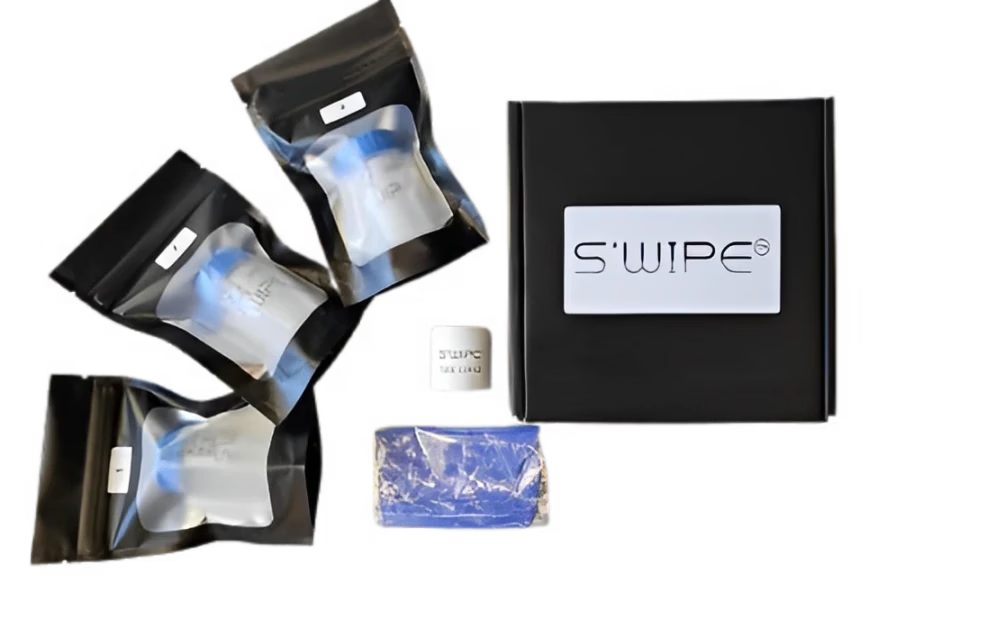
S’Wipe IQ (Inflammation Quantitation) works with the S’Wipe stool collection kit
Collect
Collect using the standard S’Wipe kit (no additional sampling steps).
Stabilize
Stabilize proteins and metabolites together in a single sample.
Measure
Measure inflammation-related proteins by ELISA.
Why this works
When ordered with S’Wipe metabolomics, results are automatically paired with fecal SCFA profiles (butyrate, propionate, acetate).
CLIA-certified laboratory
What is ELISA?
ELISA (Enzyme-Linked Immunosorbent Assay) is a widely used analytical method for measuring the amount of specific proteins in biological samples. Antibodies bind selectively to a target protein, and the signal generated is proportional to its concentration. This allows for quantitative, reproducible measurement rather than a qualitative positive/negative result.
ELISA is the method behind clinically established fecal tests such as calprotectin measurement, which is a standard tool in gastroenterology research and clinical practice. The markers in this panel use the same analytical principle, applied to a broader set of gut health proteins.
All measurements are reported as concentrations against validated reference ranges. Results are intended to inform research interpretation and support conversations with qualified clinicians and do not constitute a clinical diagnosis.